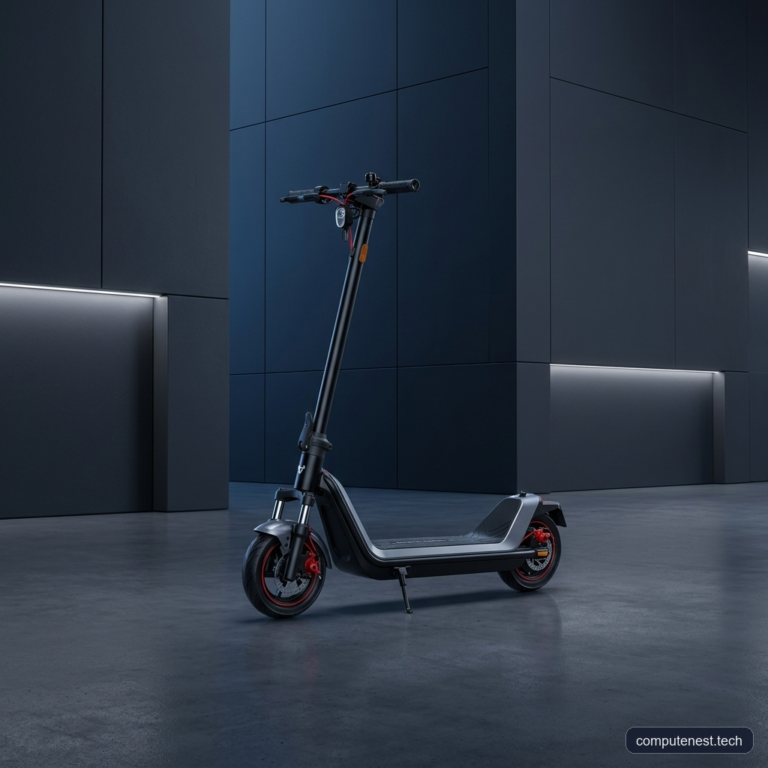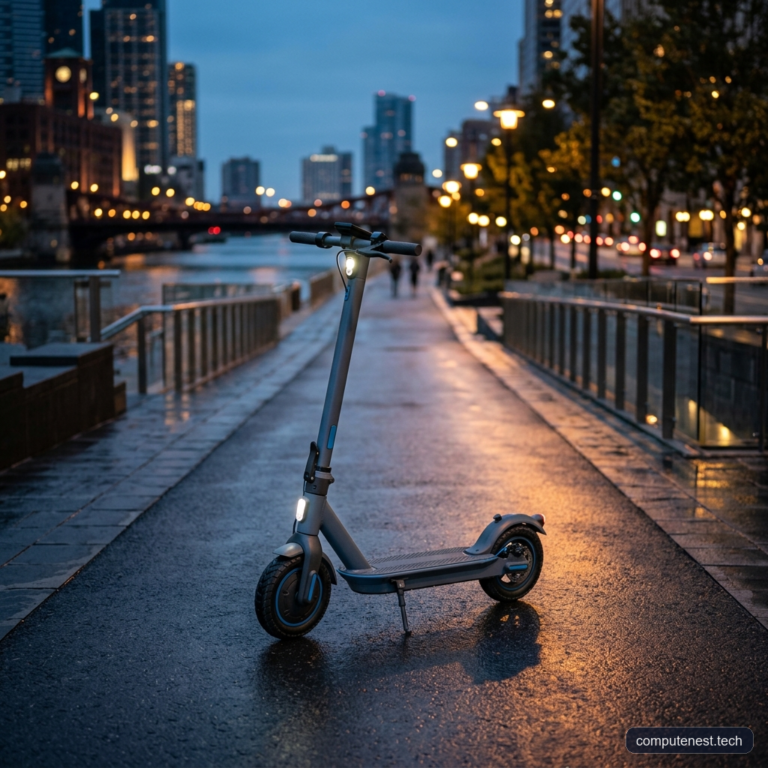
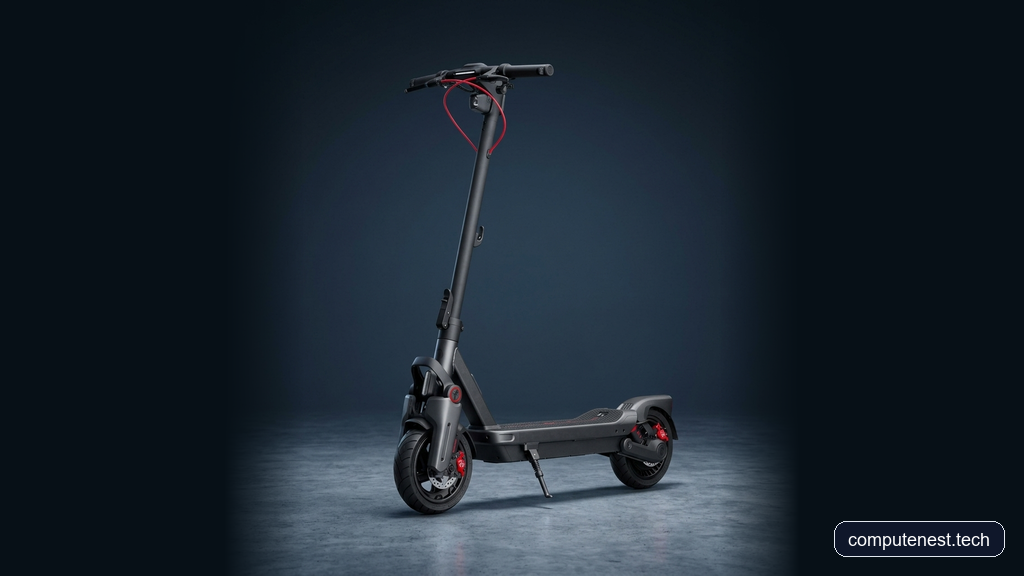
Segway Ninebot MAX G3 Review: A Mini-GT3 Commuter Champion?
This document contains the chronological transcript and technical data extracted from the hands-on review video of the Segway Ninebot Max G2 electric scooter.
Technical Specifications & Observations Extracted
- Product Name: Segway Ninebot Kickscooter Max G2 (also referred to as Ninebot G2 Max / Segway Max G2)
- Price Point: Approximately $1,000
- Motor Power: 1000W peak output motor (strong off-the-line torque, excellent incline acceleration)
- Top Speed: Up to 22 mph in Sport Mode (customizable and unlocked via the Segway-Ninebot app)
- Estimated Range: Shows 27 miles remaining at 63% battery (indicating a larger, highly efficient battery pack)
- Suspension System:
- Front: Hydraulic shock absorber (under the rubber boot on the fork)
- Rear: Dual adjustable spring shocks (all-metal assembly)
- Charging Infrastructure: Built-in fast charger. The scooter charges via a direct AC power cable (no heavy external charging brick required). Includes a secondary slow charging port.
- Tire Design: Pneumatic tubeless tires, 10-inch, self-healing gel layer.
- Ground Clearance: Extra high ground clearance due to the suspension travel and taller frame.
- Handlebar Dimensions: Wider and taller than standard models, making it highly comfortable for taller adults (5’9″ to 6’4″+).
- Folding Mechanism: Angled quick-folding stem that locks into the rear fender hook.
- App Controls (Segway-Ninebot App):
- Cruise control (activated by holding indicator)
- Walk mode (provides low-speed motor assist)
- Energy recovery / regenerative braking (Weak, Strong, or Disabled)
- Start Speed (can set to 0 mph for kickless throttle-only start)
- Custom Sport Mode acceleration and speed limits (up to 22 mph)
- Electronic Lock/Unlock function
- Beta Traction Control System (TCS) to prevent wheel slip on loose or wet surfaces
- Abnormality vibration alarm (audible and visual anti-theft)
- Safety features:
- Left and right blinkers (turn signals) integrated into the handlebar ends, controlled by a thumb toggle with optional audible turn-indicator sound.
- Ultra-bright tail light (flashes when braking, brightest tail light tested).
- High-power front LED headlight.
- Extremely loud electric horn.
Chronological Transcript
[0:00 – 1:00] Unboxing and Assembly
* 0:00 Welcome to ERER reviews! Today we are unboxing and setting up the Segway Max G2. If you want to check out this exact same scooter, there are Amazon links below. Let’s get into this. It’s a big, heavy box. A scooter from a renowned company, Segway, and definitely one of the more premium scooters at about that $1,000 price point. Let’s see how it is. I have high expectations.
* 0:23 In the box we’ve got a little allen wrench, some screws, your tire inflator, and then a bunch of paperwork. We then have a power cable. I believe it’s only the cable, as there’s no power brick block. Let’s take this piece out and also remove this piece. With those two pieces out, it looks like we basically just have to put the handlebars on.
* 0:39 Let’s lift this up and take this off, and there are our handlebars. Let’s feed this cable down inside the top tube. All these scooters are stupid simple to put together, which is one of the very nice things about them.
* 0:55 We got our bag of screws and our allen wrench. It’s always an exciting day when you’re getting a new freaking scooter. We have six screws—a whopping six screws to hold these handlebars in. That is a pretty substantial amount, but I like it. Two more on the other side and then the last two in the front.
* 1:11 The first thing I noticed is this thing is tall. Those handlebars are definitely pretty tall. This is definitely no kid’s scooter. Let’s take this thing out. It’s going to be a little heavy. Yes, this thing definitely isn’t super light.
[1:27 – 3:37] Physical Walkaround & Build Quality
* 1:27 Let’s take the plastic off. We get a look at those rear shocks. We get dual rear shocks here—one on each side. These are metal, tapping against them. The nice thing and maybe one of the best things about Segway is they’re so polished. It’s like getting an Apple product. All of the designs are super cohesive. The build quality looks great. This cover is plastic, but this is metal, this is metal, all this is metal. There’s some plastic here and there, but it’s very dense.
* 2:08 The deck feels great to the touch. It says “simply moving” right there. With Ninebot, you have “Max” in orange. The wheels are actual metal, not plastic.
* 2:31 Standing on it, I’m about 5’9″, and when I’m standing, you can see these handlebars are wider and taller. For taller people, this is going to be great.
* 2:38 This is the folding mechanism. I believe you just pull. Let’s figure out how this folds up. Lift up here, push down. That mechanism is so smooth! And it goes into that hook at an angle. It probably saves a little bit of space that way, so I don’t hate it.
* 3:12 It folds in and locks. To unfold, just reverse it. This thing is really solid.
* 3:19 Let’s lift this rubber boot on the fork. You can see in there a genuine front hydraulic shock. That’s really cool. The action feels really good, a lot better than the basic Kick Scooters like the S2.
[3:37 – 8:36] App Setup, Custom Settings, and Safety Features
* 3:37 You stand higher, but you also get a really good amount of ground clearance. The charge port is cool—it’s just a direct AC cable port. Looks like you can also do a slower charger, but I’m assuming the built-in one is faster.
* 4:05 Let’s turn this on. It shows 63% charge. It’s beeping, so we need to pair it to the app. Add device… Ninebot Kickscooter Max G2. Press the power button to confirm.
* 4:28 Activated! Now we do the safety course in the app. Now it is fully unlocked.
* 4:35 In the app, it shows 63% battery gives us 27 miles of remaining range, which is impressive. We have a dashboard option—if you mount your phone on the handlebars, you get a full dashboard view.
* 4:52 Settings: Tail light behavior. We have “brighter when braking” or “flash when braking”. I want flash. Let’s see: when I hit the brake, it flashes. The front headlight is on, and the tail light gets super bright when braking. Of all the scooters I’ve tested, this has one of the brightest tail lights. Very good for safety.
* 5:25 Cruise control: Customize how it engages. We also have Energy Recovery (regenerative braking): Weak, Strong, or Disabled. Walk mode is available. We have Charge Limits (like a Tesla) to preserve battery health.
* 5:49 Start Speed: Set to 0 mph. This means kickless start—you can just hit the throttle from a complete standstill and take off. On standard Segway scooters, you usually have to kick off first. This is great.
* 6:06 Turn Signals: Left and right blinkers integrated into the handlebars. We can enable an indicator sound. The button is perfectly positioned for your thumb. They are incredibly bright, literally blinding. Great for riding on the road.
* 6:47 Double press the signal to cancel it. There is an electronic horn—it is extremely loud, hurts my eardrums.
* 7:03 Customize sport mode settings: We can adjust the acceleration speed and set the upper limit of Sport Mode’s max speed up to 22 mph.
* 7:48 Locking function: Audible and visual alarm in case of abnormal vibrations (the anti-theft system).
* 8:11 Segway-Ninebot Lab beta: Traction Control System (TCS). It modulates motor power when it’s slippery. Very cool for winter riding.
[8:36 – 13:12] Real-World Riding Test & Impression
* 8:36 Time to take it for an initial ride. Remember, I do a full, in-depth review in about a week’s time, so make sure to subscribe.
* 8:44 First impressions of the Ninebot G2 Max. Sport mode, kickless start enabled. Let’s try it. Good power off the line from a stop!
* 9:08 The climbing ability is tested on this hill. This thing climbs like it’s nothing. I have it unlocked to 22 mph. Quite a bit of deceleration when letting off the throttle, which I don’t hate. It might be due to the heavier build overall.
* 9:33 Down this hill, it pulls hard. Once you pass 20 mph, it really starts to push hard. 22 mph feels quick for a scooter—this is pretty much as fast as you’d want to go safely.
* 9:57 Bump testing: The suspension makes a little bit of noise, but it’s not annoying and does a great job of dampening. It’s not like a full-suspension mountain bike, but it is extremely comfortable.
* 10:14 Brake tuning: The initial bite is really good. You can hustle this thing. I just tested the Gotrax G4. This has a similar max speed (G4 does 20, this does 22), but this has a 1000W peak motor, whereas the other was a 500W or 750W.
* 10:47 Incline test from a stop at 67% battery: We hit 10 mph up a fairly steep hill with zero kick-off. It has plenty of power to pull you up hills without slowing down.
* 11:18 The suspension feels great. It’s a very comfortable, sporty, and controlled ride. Going off the curb feels great.
* 11:43 Comfortable, refined. Taller handlebar placement is excellent.
* 12:08 Pulling up a slow incline hill: We hit 17 mph, then 20 mph. The power and brake modulation are impressive.
* 12:31 Braking response is quick. In the mid-range, it really starts pushing. At 100% battery, I assume it would feel even punchier. Cornering at 19-20 mph feels fun, the scooter whips nicely.
* 13:02 Links below for US, UK, Canada, and international buyers. Subscribe for the full review!